


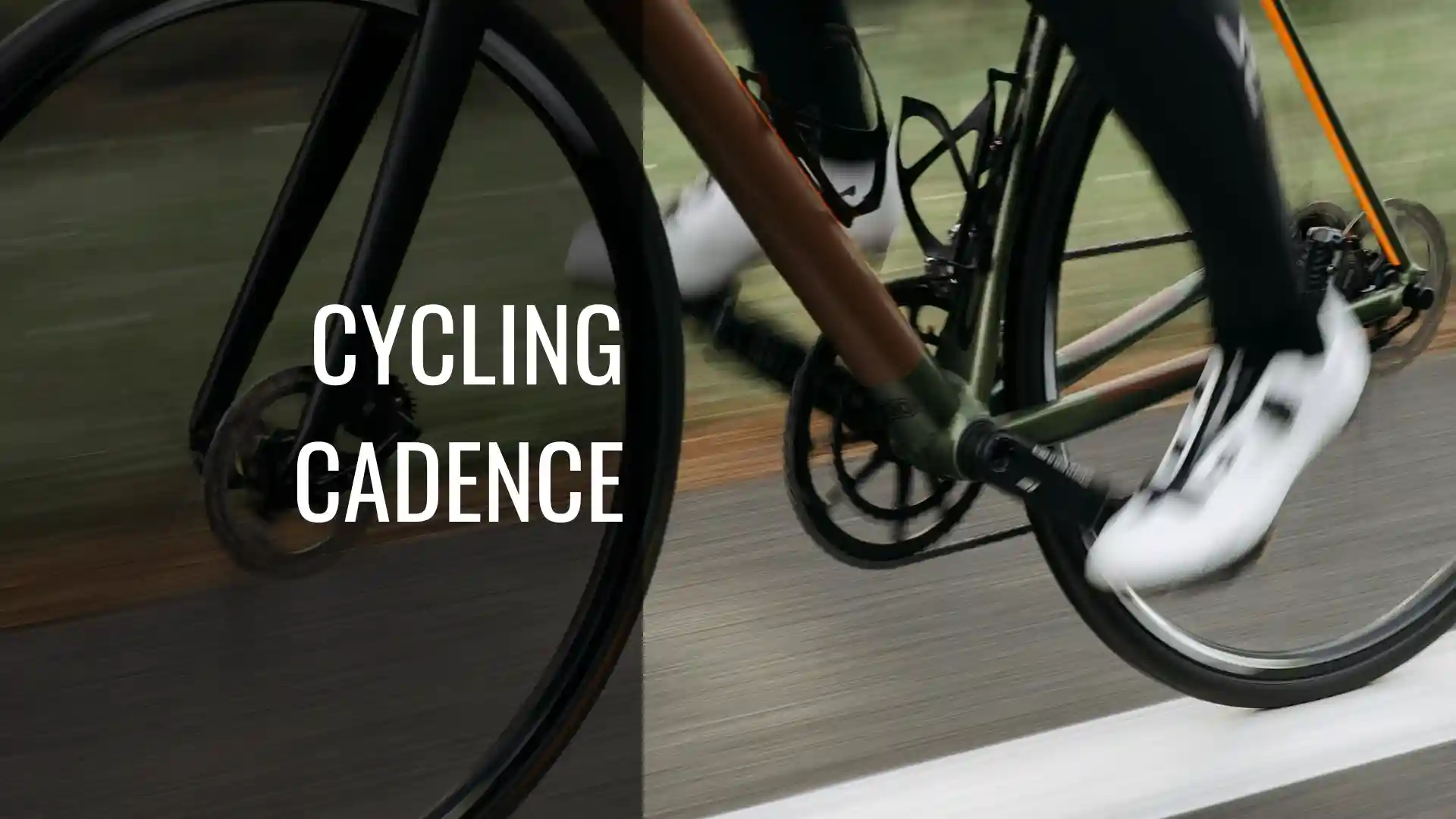
Cadence is something every cyclist has felt — that moment when your pedaling rhythm just clicks, and the bike seems to glide effortlessly beneath you. Whether you’re a weekend warrior tackling your first century ride or a seasoned cyclist chasing personal records, understanding how to adjust your pedaling speed across different terrains can transform your riding experience. Cadence isn’t just another number on your bike computer—it’s a powerful tool that affects everything from how quickly you fatigue to how efficiently you produce power.
In this post, we’ll break down what cadence really means, explore the science behind high versus low cadence riding, and help you discover the ideal pedaling rhythms for every type of terrain you’ll encounter on the road.
PEDAL MY WAY NEWSLETTER
Weekly training tips, cycling strategies, and fitness insights for sustainable performance.
No spam—just actionable guidance to help you train smarter.
Table of Contents
What Cadence Actually Means
Cadence refers to the rate at which you pedal during cycling, typically measured in revolutions per minute (RPM). If your right foot completes 90 full circles in one minute, you’re pedaling at 90 RPM. It’s a fundamental metric that, along with the gear you’re in, determines your speed and how your body produces power. Most cyclists use cadence sensors attached to their crank arm or built into power meters to track this metric, though experienced riders often develop an intuitive sense of their cadence.
Cadence is an important aspect of cycling performance and efficiency, as different cadences can affect your speed, endurance, and muscle fatigue.
The Efficiency Debate: High vs. Low Cadence
There’s ongoing debate among cyclists about whether a high or low cadence is more efficient. Lower cadences (60-70 RPM) with harder gears create more muscular force per pedal stroke, which some riders find feels more powerful. Higher cadences (80-100+ RPM) require less force per stroke but demand greater cardiovascular output and coordination.
Research suggests that self-selected cadence—what feels natural to you—is often close to optimal for energy efficiency. Most recreational cyclists naturally gravitate toward 80-90 RPM on flat terrain, while professionals often prefer 90-100+ RPM. However, the “best” cadence depends on multiple factors: your fitness level, muscle fiber composition, the duration of your ride, and the specific demands of the terrain. Elite time trialists might use lower cadences (85-95 RPM) to maximize power, while climbers often spin at 95-105 RPM to preserve their legs on long ascents.

How Cadence Impacts Muscle Recruitment
Your pedaling cadence influences which muscles are engaged during cycling, and how your body produces power. Lower cadences rely more heavily on slow-twitch muscle fibers to generate force against resistance, placing greater stress on your muscular system, and are endurance-oriented and help with sustained efforts. This can lead to earlier muscular fatigue and increased muscle damage, though it may spare your cardiovascular system somewhat.
Higher cadences shift the burden toward your cardiovascular system and rely more on fast-twitch muscle fibers. The reduced force per pedal stroke means less mechanical stress on muscles and connective tissue, but your heart and lungs work harder to supply oxygen at the increased metabolic rate. This is why higher cadences can feel “easier” on your legs but leave you breathing harder.
There’s also a neuro-muscular component—higher cadences require better pedaling technique and coordination to maintain smooth, circular pedal strokes rather than just mashing down on the pedals.
Finding Your Ideal Cadence for Different Terrains
- Flat terrain: Most cyclists perform well at 85-95 RPM on flats. This range balances muscular and cardiovascular demands efficiently. If you’re riding in a pace line or group, slightly higher cadences (90-95 RPM) help you respond quickly to surges.
- Uphill climbs: Terrain gradient matters significantly here. On moderate climbs (4-6%), many riders increase cadence to 85-95 RPM to avoid overloading leg muscles on sustained efforts. On steeper grades (8%+), cadence often drops naturally to 70-85 RPM as maintaining high RPM becomes mechanically difficult and metabolically expensive. Very steep pitches (12%+) might see cadences drop to 60-70 RPM out of necessity.
- Downhill or sprinting: Cadence becomes less critical on descents since gravity does much of the work. Many riders maintain 90-100+ RPM when actively pedaling downhill to keep legs loose and maintain some power output without overloading muscles at high speeds.
- Technical terrain and gravel: Variable surfaces often require frequent cadence adjustments. Having a wider comfortable cadence range (70-100 RPM) helps you adapt to constantly changing conditions, loose surfaces, and the need for sudden power applications.
- Into headwinds: Slightly lower cadences (80-90 RPM) with bigger gears can be more efficient when fighting wind resistance, as the increased resistance is similar to climbing.
- Training with different cadences can improve your overall cycling performance by enhancing your muscular endurance and cardiovascular fitness.
- Using a cadence sensor or cycling computer can help you monitor and adjust your pedaling rate in real-time.
- Proper bike fit and gearing also play a role in finding your ideal cadence, as they affect your pedaling mechanics and efficiency.
- Experimenting with various cadences during your rides can help you discover what works best for you and your cycling goals.
The key is developing comfort across a range of cadences through practice. Doing cadence drills—intentionally riding at very high (110+ RPM) and very low (60 RPM) cadences for short intervals—can expand your comfortable range and make you more adaptable to whatever the road throws at you.

Mastering Your Pedal Stroke
Finding your ideal cadence isn’t about rigidly adhering to a single magic number—it’s about developing the flexibility and awareness to adapt your pedaling rhythm to the terrain, your fitness level, and your riding goals. While guidelines suggest certain ranges for different situations, your body is the ultimate authority on what works best for you. Start by experimenting with different cadences during your training rides, paying attention to how your legs, lungs, and overall energy levels respond. Over time, you’ll develop an intuitive sense of when to spin faster up a climb or when to push a bigger gear into a headwind.
The most versatile cyclists are those who can comfortably pedal across a wide range of cadences, adapting seamlessly as the road rises, falls, and winds before them. So get out there, play with your gears, and discover the rhythms that make you fastest, strongest, and most efficient. Your ideal cadence is waiting to be found—one pedal stroke at a time.
Related Cycling and Training Content
For further cycling and training tips, you can also listen to the Ask The Pedalist podcast, where we discuss common cycling topics.

Mukund Murali is the founder of Pedal My Way (pedalmyway.com), a cycling and fitness media brand reaching 50,000+ monthly visitors. He brings 20+ years of cycling experience spanning road, gravel, and mountain biking, with deep expertise in bike mechanics and repair. A CrossFit L1 and L2 certified trainer (2018–2023), Mukund combines strength training methodology with cycling performance to create evidence-based content for the everyday rider. He is the host of Ask The Pedalist podcast and creator of the PMW Fit workout app on Google Play.

In the article “Should I spin fast or grind hard” the following statement is made:
‘However, the “best” cadence depends on multiple factors: your fitness level, muscle fiber composition, the duration of your ride, and the specific demands of the terrain’.
I think the statement should have something added about rider physiology and limb length is definitely a factor in larger riders and I’ll explain why.
At 6’7” 102kg I’ve found following the general trend of faster spinning hasn’t worked for me and has actually been detrimental on balance by reducing leg strength and consistently overworking cardiovascular effort.
My analogy is that those with long limbs in their kinetic chain are akin to a car engine with long piston strokes. Long piston strokes ‘naturally’ produce higher torque at lower RPMs versus short piston strokes.
Over the last 12 months I’ve gone back to incorporating low cadence ie 50-60rpm into my endurance training and I’m amazed at the return in leg strength, cardiovascular efficiency and extra grunt for grinding up climbs, given my bulk I easily run out of gears on climbs above 8-10%.
So I’m a definitely a believer now in letting your physiology guide cycling style.
Hope this is of interest.
All the best.
Jason.
You are absolutely correct. I am over 6 feet as well, and had to get a professional bike fit, where they replaced the stem and adjusted seat height to accommodate my limbs for maximum comfort/ efficiency combo :o). Will update the post with your inputs.