





Power Cycling 101
Frequently Asked Questions
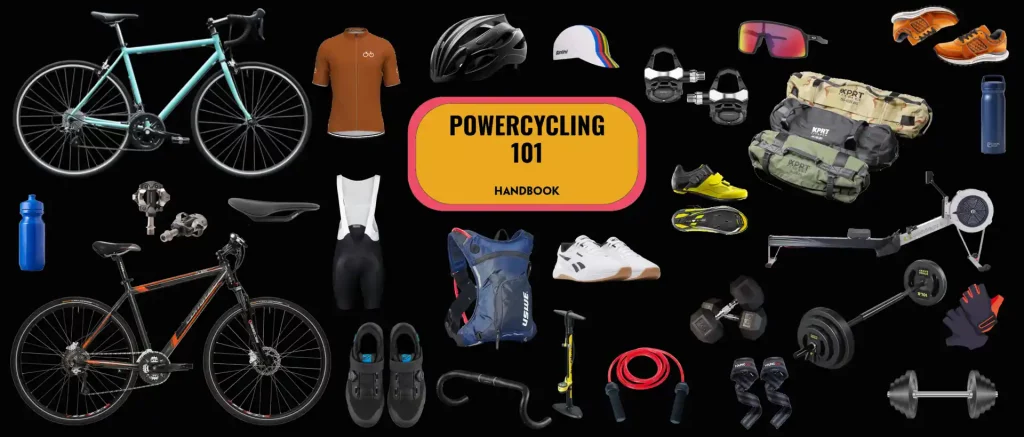
Power Cycling is the practice of combining structured strength training with your regular cycling routine. Instead of just riding your bike to get faster, you use resistance training (like weights or bodyweight exercises) to build the explosive power and muscular strength needed for climbing, sprinting, and endurance.
Traditional training often focuses 100% on “time in the saddle” or riding more miles. Power Cycling treats strength work as a core requirement, not an optional add-on. It focuses on building a balanced athlete who is resistant to injury and fatigue, rather than just a cyclist with strong lungs but muscle imbalances.
No. You can start effectively in your living room. While a gym is helpful for heavy lifting later on, you can see significant results using bodyweight exercises or basic home equipment.
You can start with nothing but your own body weight. If you want to upgrade, a pair of adjustable dumbbells (20-50 lbs) or a sandbag (40-100 lbs) are versatile, low-cost tools perfect for cycling-specific movements like squats and lunges.
Don’t overcomplicate it. Master the foundational movements first: squats, deadlifts, single-leg work (like lunges), planks for core stability, and upper body pulling. If you can’t do 20 perfect bodyweight squats, start there before adding weights.
For most cyclists, two sessions per week (45-60 minutes each) is the sweet spot. This provides enough stimulus to build strength without leaving you too tired to ride your bike effectively.
Try to schedule strength training on the same days as your hard rides (ideally 6+ hours apart) or the day after. This ensures your “easy” recovery days remain truly easy, allowing your muscles to repair.
You should evaluate your progress after 6-8 weeks. Pay attention to how you feel during difficult parts of your rides, specifically sprints, steep climbs, and the final miles of a long ride. You should notice improved power output and less fatigue.
Power cycling programs typically follow periodized phases: you build maximum strength in the off-season, convert that strength to power during the pre-season, and then switch to maintenance work during the race season to preserve your gains.
While your legs power the bike, upper body strength is crucial for overall bike control and injury prevention. It helps you maintain stability and handle the bike effectively, especially during technical riding or climbing.
This is the traditional belief that riding longer distances is the only way to improve. The Power Cycling philosophy argues this can lead to overtraining, muscle imbalances, and burnout, whereas smarter, structured strength training creates a more resilient athlete.
You should prioritize bodyweight mastery first. A good rule of thumb is to ensure you can perform 20 quality bodyweight squats or hold a plank for 60 seconds before you start adding external loads.
Some fatigue is normal, but you should not feel “destroyed.” If your strength work is significantly lowering the quality of your rides, you should reduce the volume or intensity of the lifting. The goal is to enhance your riding, not compromise it.
Sandbags (40-100 lbs) are highlighted as incredibly versatile because they build functional strength and core stability. Exercises like sandbag squats and carries translate directly to better bike handling and power transfer.
Yes. Beyond immediate speed, it helps address muscular imbalances caused by the repetitive motion of cycling and helps build bone density, which is often a weak point for dedicated cyclists.
A strong core is essential for stability and power transfer. It anchors your body so that the energy you generate can be efficiently delivered to the pedals rather than being lost through excessive body movement.
Once you have built a foundation, power cycling can involve heavy compound movements like barbell squats and deadlifts, as well as explosive plyometric exercises like box jumps to develop speed and power.
Power cycling targets the ability to generate explosive force and sustain high power outputs. This translates to an improved ability to attack steep gradients and maintain a strong pace on climbs where raw strength is more limiting than just cardiovascular endurance.