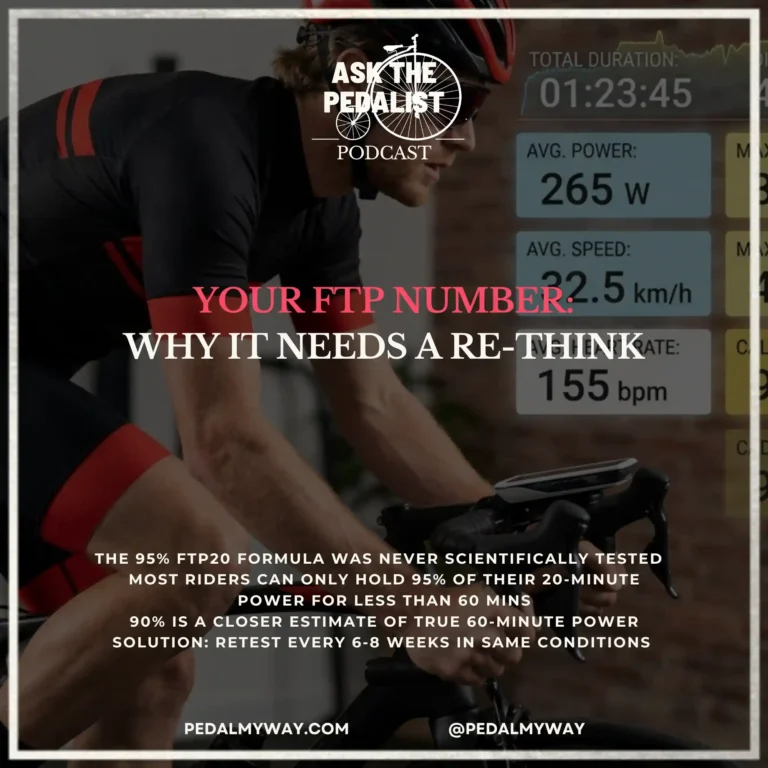
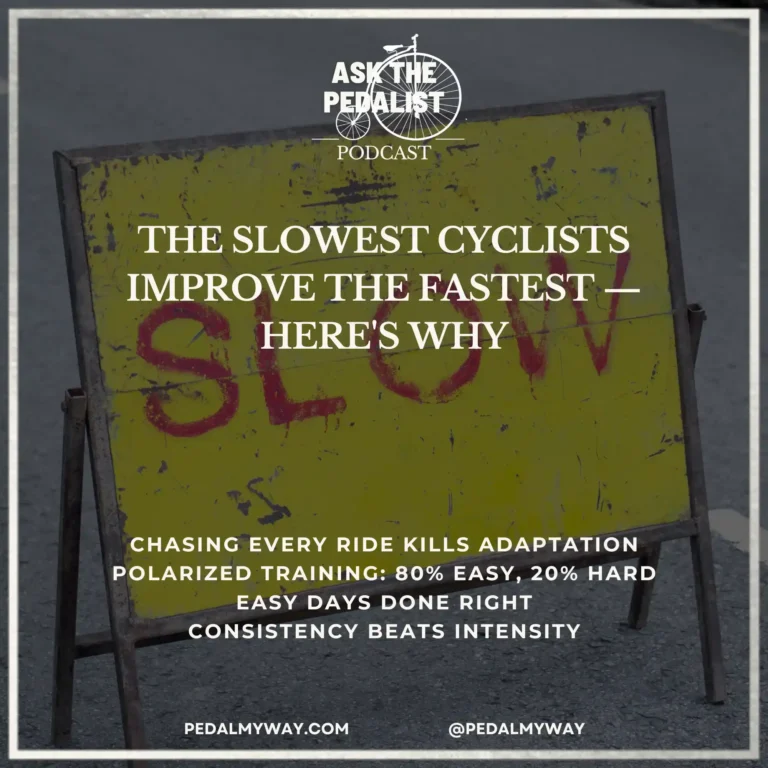
Topics covered:
- What studies say about indoor vs. outdoor physiological effort
- The heat stress problem most indoor riders ignore
- Why the trainer is actually better for structured quality work
- What outdoor riding develops that no trainer can replicate
- A practical framework for splitting your training across both
Sources & Research
PHYSIOLOGICAL EQUIVALENCE (matched effort = matched adaptation)
Abbiss, C.R. et al. (2008). Reliability of power output during dynamic cycling. International Journal of Sports Physiology and Performance. → https://pubmed.ncbi.nlm.nih.gov/19208924/
Lepers, R. et al. (1997). Physiological factors associated with overtraining in road cyclists. International Journal of Sports Medicine. → https://pubmed.ncbi.nlm.nih.gov/9298876/
HEAT STRESS INDOORS / HEART RATE DRIFT
Arngrimsson, S.A. et al. (2004). Relation of heart rate to percent VO2 peak during submaximal exercise in the heat. Journal of Applied Physiology. → https://pubmed.ncbi.nlm.nih.gov/14660510/
Nybo, L. (2008). Hyperthermia and fatigue. Journal of Applied Physiology. → https://pubmed.ncbi.nlm.nih.gov/18483168/
Marino, F.E. (2002). Anticipatory regulation and avoidance of catastrophe during exercise-induced hyperthermia. Comparative Biochemistry and Physiology. → https://pubmed.ncbi.nlm.nih.gov/11854006/
STRUCTURED INTERVALS / TRAINING SPECIFICITY INDOORS
Laursen, P.B. & Jenkins, D.G. (2002). The scientific basis for high-intensity interval training. Sports Medicine. → https://pubmed.ncbi.nlm.nih.gov/11839069/
Stepto, N.K. et al. (1999). Effects of different interval training programs on cycling time-trial performance. Medicine & Science in Sports & Exercise. → https://pubmed.ncbi.nlm.nih.gov/10219226/
NEUROMUSCULAR SKILL / OUTDOOR BIKE HANDLING
Millet, G.P. et al. (2002). Alterations in neuromuscular function after an ultramarathon. Journal of Applied Physiology. (neuromuscular fatigue and skill degradation context) → https://pubmed.ncbi.nlm.nih.gov/12133912/
Hue, O. et al. (2001). Torque and power as a function of pedal rate during sprint exercise. Journal of Sports Sciences. (variable terrain demand context)
VARIABLE TERRAIN / UNSTRUCTURED TRAINING STIMULUS
Vogt, S. et al. (2007). Power output during stage racing in professional road cycling. Medicine & Science in Sports & Exercise. → https://pubmed.ncbi.nlm.nih.gov/17596777/
Ebert, T.R. et al. (2005). Power output during a professional men’s road-cycling tour. International Journal of Sports Physiology and Performance. → https://pubmed.ncbi.nlm.nih.gov/19114756/
PSYCHOLOGICAL ENDURANCE / MENTAL LOAD OF LONG RIDES
Marcora, S.M. et al. (2009). Mental fatigue impairs physical performance in humans. Journal of Applied Physiology. → https://pubmed.ncbi.nlm.nih.gov/19131473/
Pageaux, B. & Lepers, R. (2016). Fatigue induced by physical and mental exertion increases perception of effort. Frontiers in Physiology. → https://pubmed.ncbi.nlm.nih.gov/27761124/
SUNLIGHT, VITAMIN D & MOOD / TRAINING ADHERENCE
Anglin, R.E. et al. (2013). Vitamin D deficiency and depression in adults. British Journal of Psychiatry. → https://pubmed.ncbi.nlm.nih.gov/23377209/
Scragg, R. (2019). Emerging evidence of thresholds for beneficial effects from vitamin D supplementation. Nutrients. → https://pubmed.ncbi.nlm.nih.gov/30781847/
Recommended lay-level references:
TrainingPeaks — Indoor vs Outdoor Training → https://www.trainingpeaks.com/blog/
Cycling Weekly science coverage → https://www.cyclingweekly.com/fitness
mysportscience.com (Asker Jeukendrup) → https://www.mysportscience.com
Disclaimer:
Content is for informational purposes only and does not constitute medical or professional training advice. Consult a qualified coach or physician before modifying your training program.
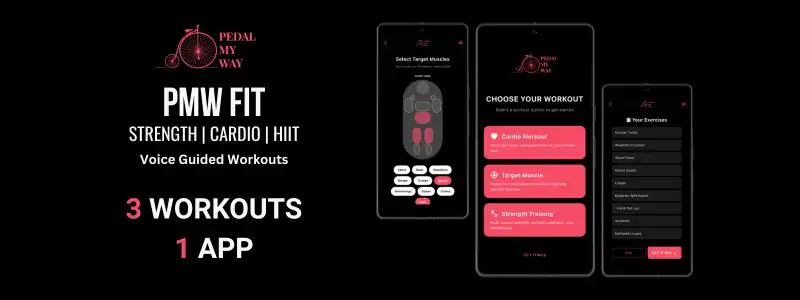



Mukund Murali is the founder of Pedal My Way (pedalmyway.com), a cycling and fitness media brand reaching 50,000+ monthly visitors. He brings 20+ years of cycling experience spanning road, gravel, and mountain biking, with deep expertise in bike mechanics and repair. A CrossFit L1 and L2 certified trainer (2018–2023), Mukund combines strength training methodology with cycling performance to create evidence-based content for the everyday rider. He is the host of Ask The Pedalist podcast and creator of the PMW Fit workout app on Google Play.