Heavy legs are one of the most frustrating things about cycling because they don’t come with an obvious explanation. Sometimes it’s last weekend’s long ride still catching up to you. Sometimes it’s what you didn’t eat. Sometimes your legs are quietly waving a flag you’ve been ignoring for two weeks straight. As a rider with over 20 years of experience dealing with heavy legs after cycling the trails throughout the U.S., I wanted to present a guide on how to respond when heavy legs get you down.
In this post, I will walk through how to tell real fatigue from normal soreness, what’s actually happening nutritionally when your legs brick up, which recovery strategies are worth your time, and when the smartest ride you can take is no ride at all.
Table of Contents
Recognizing the Difference Between Good Soreness and Deep Fatigue
Your legs will always tell you something after a hard ride — the trick is learning to speak their language. Not every heavy feeling means you pushed too hard, but not every heavy feeling means you should push harder either. Here is how to actually tell them apart.
- Good Soreness Fades Once You Get Moving: Delayed onset muscle soreness (DOMS) typically shows up 12 to 48 hours after a tough effort and tends to loosen up once you get moving. Your legs feel stiff and tender at the start, but gradually come back to life within the first 20 minutes. That is your body adapting and rebuilding stronger.
- Deep Fatigue Stays Heavy No Matter How Long You Warm Up: Systemic fatigue does not respond to a warmup the way soreness does. Your power feels flat, nothing clicks, and your legs feel like lead even on a casual effort that would normally be easy. That persistent heaviness is a signal from your central nervous system — riding through it rarely ends well.
- Good Soreness Is Localized. Deep Fatigue Is Everywhere: Soreness after a hard climb usually lives somewhere specific — your quads, calves, or glutes. Accumulated fatigue feels more diffuse, like your whole body is running at 70 percent. When you cannot point to what hurts because everything just feels off, that distinction is worth respecting.
- Your Mood and Sleep Are Data Too: Overreaching fatigue almost always comes with a psychological edge — irritability, restless sleep, and low motivation where even the idea of riding sounds like work. If your legs feel heavy and your mind feels flat at the same time, your body is not being dramatic. The pattern across several days matters far more than any single bad ride.
Nutrition Interventions and Glycogen Depletion
You finish a solid ride, eat what feels like a normal dinner, then wake up with legs that feel like wet cement. The real culprit is usually what happened in the kitchen afterward — or what didn’t. Glycogen is what your body converts carbohydrates into, storing it in muscles and liver for quick energy. When those stores run low, your muscles simply don’t have the fuel they need — leading to that heavy, sluggish sensation that’s easy to mistake for overtraining.
Timing and pairing matter just as much as quantity. Your muscles have a glycogen resynthesis window most active in the 30–60 minutes post-ride, and skipping it means you’re starting tomorrow’s ride already behind.
- Post-ride carb-protein pairing: Aim for a 3:1 ratio of carbohydrates to protein within an hour of finishing. Rice with eggs or a banana with Greek yogurt does the job without overthinking it.
- Fuel before you feel it: Consume easily digestible carbs 60–90 minutes before a ride. Even 30 grams of fast carbs before you clip in makes a measurable difference by mile 10.
- Overnight loading for back-to-back days: A carb-dense dinner — pasta, sweet potatoes, oats — gives your muscles overnight hours to rebuild stores before your next morning ride.
- Sodium and hydration: Heavy legs are sometimes dehydration in disguise. Replenish sodium to help cells hold fluids, and drink 12–16 ounces of water before bed to offset overnight fluid loss.
Tonight, pair your dinner with a deliberate carbohydrate source and notice how different your legs feel on tomorrow’s first pedal stroke.

Active Recovery Strategies That Actually Work
Most riders hear “active recovery” and picture a slow, pointless spin that feels like a waste of time. But very light movement genuinely accelerates how fast your legs come back — it drives blood flow through tired tissue, delivers nutrients to fatigued muscles, and clears the metabolic waste that causes that heavy, concrete feeling. It’s not another workout; it’s gently coaxing your body back to readiness.
The mistake most people make is going too hard on recovery days. Keep the effort genuinely easy and the duration short — if you’re pushing through moderate effort on tired legs, you’re digging the hole deeper, not climbing out of it.
- Easy spinning at 50-60% max heart rate: Twenty to thirty minutes is enough. You’re flushing lactate and moving nutrients into fatigued muscle fibers, not training.
- Walking: Genuinely underrated. A 20-30 minute walk engages your legs differently than cycling, reduces pedaling-specific load on taxed muscles, and offers real mental clarity too.
- Foam rolling the posterior chain: Focus your myofascial release work on quads, glutes, and hamstrings — muscles doing the most work on the bike — rather than rolling everything randomly.
- Dynamic stretching: Gentle leg swings and flowing movements improve mobility without stressing already fatigued tissue the way static holds can.
- Legs-up-the-wall for 10 minutes: Simple passive drainage using gravity. It sounds too easy to matter, but consistent use makes a noticeable difference in how your legs feel the next morning.
Tonight, before bed, spend ten minutes with your legs up the wall — that one habit alone will change how tomorrow’s ride feels.
When to Step Away from the Bike and Focus on Mobility
Sometimes the best thing you can do for your cycling is to not cycle at all. If you’ve had three or more consecutive days of heavy legs, you’re waking up still exhausted, or the thought of riding feels like a chore — that’s not a sign to push harder. That’s your body asking for a different kind of attention entirely. Pedaling keeps you in one plane of motion, and over time that pattern tightens everything: hip flexors, hamstrings, thoracic spine. Accumulated pattern fatigue doesn’t respond to more pedaling. It responds to deliberate, targeted movement work.
Step away with intention, not guilt. Here’s what actually moves the needle:
- 90/90 hip rotations: Targets the hip capsule directly — something cyclists almost never load. Two minutes each side will expose tightness that’s quietly stealing your power output.
- Thoracic spine mobility: Foam rolling your mid-back and doing open-book rotations breaks the postural lock that builds from hours in an aggressive riding position.
- Couch stretch holds: Two rounds of 90 seconds per side addresses the chronically shortened hip flexor complex — the root cause of that heavy, dragging feeling in your quads.
- Slow bodyweight squats with a pause: Restores neuromuscular recruitment patterns that fatigue disrupts. You’re reminding your legs how to fire correctly, not training them harder.
- A genuinely slow 20-minute walk: Moves lymphatic fluid, promotes blood flow, and adds zero training stress. Most riders underestimate how much this accelerates recovery.
This week, swap one planned ride for 20 minutes of hip and spine work — pick two movements from this list and do them without a performance goal.
Lower Body and Total Body Workouts
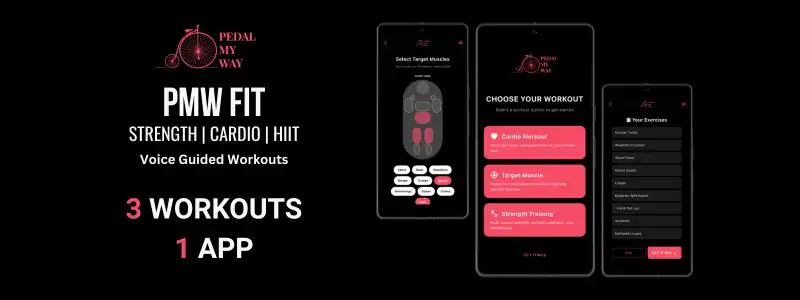
Above are some of my lower body workouts for leg flexibility and lower mobility.
Answers to Your Questions About Heavy Legs After Cycling
What causes my legs to feel heavy and sluggish when I start cycling?
Heavy legs early in a ride typically point to incomplete recovery from previous workouts, lingering muscle fatigue, or depleted glycogen stores that haven’t been fully restocked.
Can my pedaling technique contribute to heavy legs?
Yes. “Mashing” the pedals in a hard gear at a low cadence requires excessive muscle force. Shifting to an easier gear and “spinning” at a higher cadence (80–100 RPM) shifts the burden from your muscular system to your cardiovascular system, delaying fatigue.
How does my bike setup impact leg fatigue?
An incorrect saddle height or poor handlebar reach causes biomechanical misalignment. This forces your leg muscles, especially your quadriceps, to overcompensate and absorb unnecessary strain during the pedal stroke.
Why do my legs feel like concrete right after a mid-ride café stop?
Eating sugary pastries or simple carbohydrates triggers an insulin spike to lower your blood sugar. When you resume pedaling, your muscles demand glucose simultaneously, causing a sudden blood sugar drop known as rebound hypoglycemia.
Does dehydration make my legs feel heavy?
Losing water and essential electrolytes like sodium, magnesium, and potassium through sweat severely impairs muscle contraction and relaxation, leading to a heavy sensation, weakness, and cramping.
Is overtraining a frequent cause of heavy legs?
When your training volume and intensity consistently outpace your body’s ability to recover, you enter a state of overtraining. A primary symptom is chronic leg heaviness combined with plateauing or declining performance.
Can skipping a warm-up make my legs tire out faster?
Jumping straight into a hard effort without a proper dynamic warm-up restricts early blood flow and oxygen delivery, causing muscles to feel stiff, heavily burdened, and prone to an early accumulation of metabolic waste.
How does a lack of strength training affect cycling endurance?
Without foundational strength in the glutes, hamstrings, and core, your quadriceps are forced to absorb the majority of the pedaling load, leading them to tire out and feel heavy much earlier in the ride.
What is the most effective way to eliminate heavy legs after a hard ride?
Prioritizing 7 to 9 hours of quality sleep, rehydrating with electrolytes, consuming a mix of carbohydrates and protein within an hour of finishing, and incorporating active recovery days will efficiently clear metabolic waste and repair muscle tissue.
Your Legs Are Talking — It's Time to Start Listening
Heavy legs are not a sign that you are failing at cycling. They are feedback. The riders I have seen struggle most are the ones who either ignore that feedback completely or panic and stop riding altogether. The answer almost always lives somewhere in the middle — a smarter recovery day, a real meal, ten minutes of mobility work you actually do instead of just planning to do.
Start small. After your next ride, before you do anything else, eat something with both carbs and protein within 45 minutes and take note of how your legs feel the following morning. That one habit will tell you more about your recovery than any wearable ever could.
Related Cycling and Training Content

Mukund Murali is the founder of Pedal My Way (pedalmyway.com), a cycling and fitness media brand reaching 50,000+ monthly visitors. He brings 20+ years of cycling experience spanning road, gravel, and mountain biking, with deep expertise in bike mechanics and repair. A CrossFit L1 and L2 certified trainer (2018–2023), Mukund combines strength training methodology with cycling performance to create evidence-based content for the everyday rider. He is the host of Ask The Pedalist podcast and creator of the PMW Fit workout app on Google Play.