You’re standing at the trailhead parking lot, watching someone roll up on a matte-grey gravel bike that looks like it could climb a mountain pass and then make it to brunch. You glance down at your own setup — maybe it’s fine, maybe it’s not — and that quiet question creeps in: “Am I riding the right bike for the rides I actually want to do?”
That question stuck with me too. And honestly, the gravel category has exploded so fast that even people who’ve been riding for years feel lost in the noise. Every brand is now making a gravel bike, every review site is ranking them, and half the recommendations seem written for someone training for Unbound rather than someone who wants to spend a Saturday exploring dirt roads outside of town.
A couple of years ago I bought a Poseidon X gravel bike, but I wanted to see the current offerings. So I went through the 2026 lineup with a different filter: real-world usefulness. Not lab specs, not race credentials — just what actually makes a gravel bike worth riding for the kind of cycling most of us do.
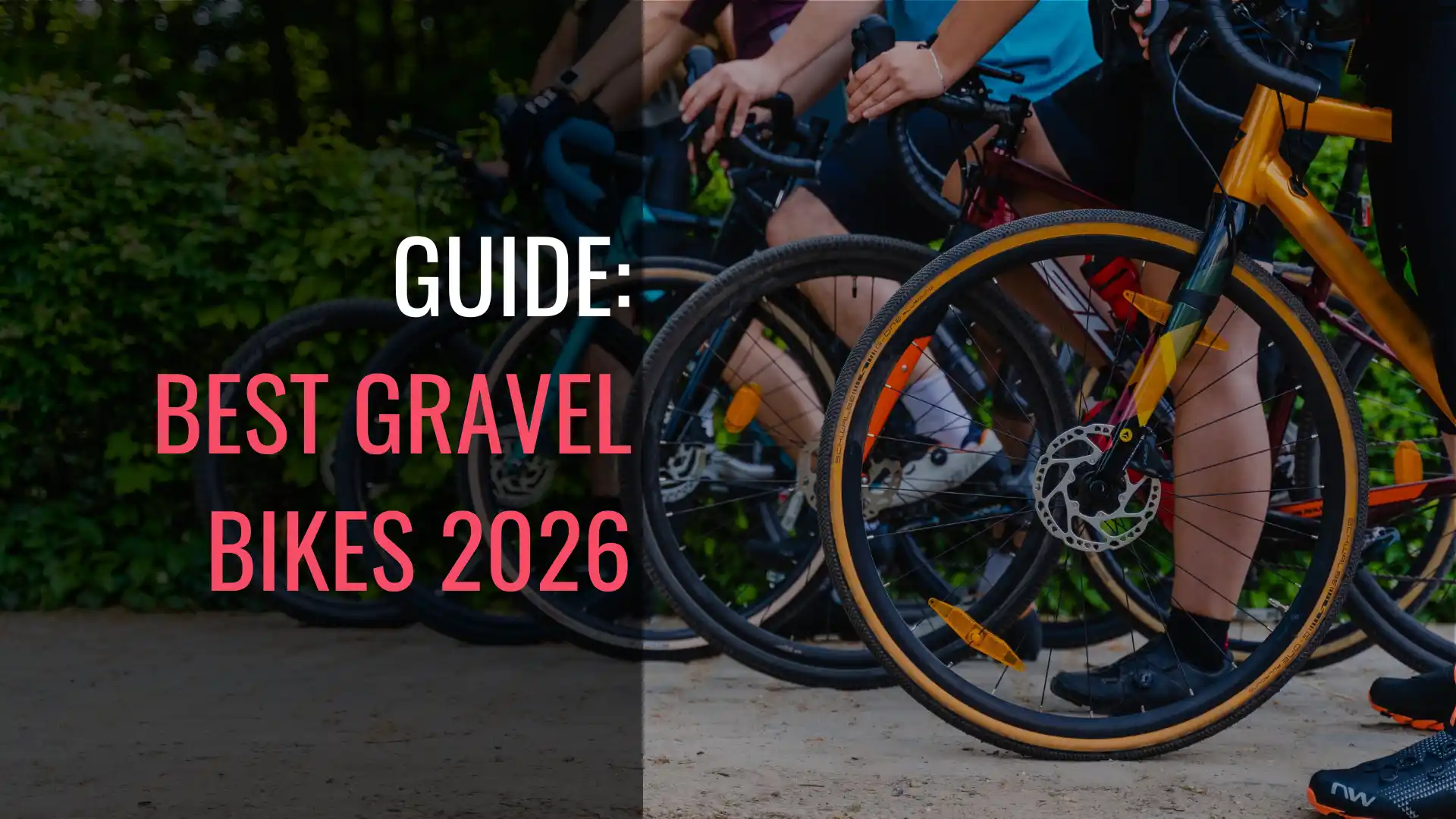
In this post, we try to cover the best gravel bikes across every category, break down frame materials, explain tire clearance without the jargon, and help you figure out which bike actually fits your riding — not someone else’s. This is in no way an exhaustive list, but a good starting guide on the current options.
Table of Contents
Best Overall Gravel Bikes of 2026
Gravel bikes today seems to handle both pavement and trails with ease, and this is how most of us fall into the gravel rabbit hole. The category has matured well beyond “just slap some wider tires on a cyclocross frame,” and the bikes available in 2026 reflect that.
The best overall gravel bike is not the most expensive — it is the one that disappears beneath you across the widest range of conditions. Commuting, light singletrack, loaded touring, fast group rides — without demanding you choose a specialty before you even know what you love. That versatility is the whole point.
- Specialized Diverge STR Comp: The Future Shock suspension absorbs chop that would rattle your fillings loose on a rigid frame, keeping your hands fresher on longer rides without feeling like a squishy mountain bike.
- Trek Checkpoint ALR 5: A well-built aluminum frame with IsoSpeed decoupler that punches above its weight class. Reliable performance without a carbon price tag.
- Cannondale Topstone Carbon 4: The Kingpin rear suspension isolates vibration without softening pedaling power, handling loaded bags and fast singletrack with equal confidence.
- Giant Revolt Advanced 1: D-Fuse seatpost and handlebar do real work on rough terrain, with geometry sitting right between aggressive and comfortable. Build kit at this price is surprisingly complete.
- Salsa Warbird Carbon GRX 600: Built for long mixed-surface days with tire clearance wide enough to run 50mm rubber when conditions demand it.
- Canyon Grizl: Robust frame and ample clearance make it equally ready for technical singletrack and fully loaded bikepacking without sacrificing too much speed.
Pick the bike that matches your most common riding scenario, then use it as your benchmark through the category-specific sections below.
Best Budget Gravel Bikes Under $2,000
A well-chosen budget bike delivers 90% of the joy and capability of its high-end cousins, leaving you with more cash for adventures, good coffee, and a new set of tires when the time comes. The component gap between budget and premium has quietly closed in ways that actually matter for everyday riding.
What separates a good budget gravel bike from a frustrating one comes down to three things: geometry that fits real-world riding, enough tire clearance to run something wider than 40mm, and a drivetrain that shifts reliably after a muddy descent. Forget marginal gains marketing — the bikes below nail those fundamentals without asking you to refinance anything.
- Trek Checkpoint ALR 4: IsoSpeed de-coupler technology takes the edge off rough gravel, with geometry relaxed enough for all-day comfort without feeling sluggish on climbs.
- Cannondale Topstone 3: Rear suspension flex built into the seat-stays is a genuine differentiator, not a gimmick. Pair that with 45mm tire clearance and Shimano GRX, and this bike handles more terrain than most riders will ever throw at it.
- Specialized Diverge E5 Comp: Future Shock suspension in the fork genuinely smooths out washboard gravel in a way a rigid fork cannot, with a generous fit range across sizes.
- Marin DSX 2: Often overlooked, but 50mm tire clearance and adventure-focused geometry give you real off-road options without an immediate wheel swap.
- Orbea Terra H40: Clean internal cable routing and a frame designed to accept a rack and fenders from day one makes this the obvious choice if bikepacking is in your future.
- Kona Rove DL: A chromoly steel frame delivers wonderfully compliant ride quality that soaks up road chatter, making it a fantastic option for long-distance exploration or light touring.
Pick one that matches your local terrain and go test ride it this weekend — geometry feels very different on paper than it does on gravel.
Best Racing Gravel Bikes for Speed
A fast gravel bike is not just a road bike with slightly bigger tires. That thinking will cost you on a mixed-surface course where the ground shifts under you mid-sprint. For most riders, a race-ready gravel bike simply means one that feels efficient and responsive without holding you back when you want to put the power down.
What separates a racing gravel bike from a general-purpose one comes down to a few key traits:
- Responsive handling: Slightly quicker steering and a shorter wheelbase allow for sharper turns and immediate reactions when you need to pick precise lines at speed.
- Stiff bottom bracket: When you stand on the pedals to accelerate, a stiff BB ensures your effort goes directly to the rear wheel rather than disappearing into frame flex.
- Race geometry: Shorter head tubes and longer reach favor an aggressive, aero-friendly position over long efforts.
- Tire clearance around 40–45mm: Enough room for fast-rolling tires that handle loose corners without sacrificing efficiency on harder surfaces.
These bikes do one thing well, and that focus shows at threshold.
- Specialized Crux Expert remains the benchmark most competitors measure themselves against.
- Trek Checkpoint SL 7 adds IsoSpeed compliance for riders pushing long, rough courses.
- Cervélo Aspero rewards precise, aggressive steering.
- Giant Revolt Advanced Pro 0 delivers an impressive spec-to-price ratio with natural-feeling vibration damping.
Pick the bike that matches your typical course conditions — then test ride it before you commit.
Best Gravel Bikes for Bikepacking
Bikepacking changes how you think about your bike entirely. Frame bag mounts matter more than gram counts, and whether your fork can carry water without rattling itself loose suddenly feels like the most important engineering question ever asked.
Here’s the assumption worth challenging: a bikepacking bike doesn’t need to be heavy or slow. What you actually need is a stable, comfortable platform that carries load without turning twitchy, with the mounts to attach gear properly. The goal is to feel like you’re riding a bike, not wrestling a mule. Look for:
- Stable geometry: longer wheelbase and slacker head tube angle for confidence on descents with a loaded setup
- Mounting points everywhere: top tube, fork, and frame triangle mounts let you distribute weight efficiently without bag sag
- Generous tire clearance: running 45–50mm tires at lower pressures dramatically improves comfort and traction on rough overnight terrain
- Compliant frame material: steel and titanium absorb trail chatter over long days in ways carbon rarely matches
Bikes worth serious consideration:
- Salsa Cutthroat for its 29-inch wheels and bikepacking-specific geometry
- Trek Checkpoint ALR 5 for its IsoSpeed compliance at an honest price point
- Surly Midnight Special for steel durability on rough roads
- Specialized Diverge STR Expert when multi-day comfort justifies the investment.
Load up your current bike for one overnight trip first — you’ll quickly learn exactly what your next build actually needs.

Best Gravel Bikes for Canadian Winters and Shoulder Seasons
You roll out in October thinking the trail is fine, and three kilometres in you’re pushing through ankle-deep slush with your derailleur packed with mud. Canadian shoulder seasons don’t care about your ride plan. Freeze-thaw cycles, wet gravel, salt spray, and frozen ruts create conditions that expose every weakness in a bike designed purely for dry summer riding.
The right machine makes you want to ride through the ugly months instead of hiding in the basement until May. Prioritise
- Generous tire clearance for 45mm+ rubber
- Full fender mounts
- Fat-mount disc brakes — rim brakes in a wet weather are not ideal.
- Steel and titanium frames provide protection against thermal shock and corrosive road salt with quiet competence. Check this post on riding in winter weather.
- Surly Midnight Special: Steel frame, up to 53mm tire clearance, and more fender mounts than you’ll ever use — exactly the right problem to have.
- Salsa Cutthroat: Mountain bike-inspired geometry delivers real stability on slick surfaces, with massive tire clearance for aggressive studded rubber and mounts for everything you need on long winter days.
- Kona Sutra LTD: A bombproof steel tourer with compliant ride quality that absorbs frozen gravel chatter and handles mixed conditions without complaint.
- All-City Gorilla Monsoon: Steel frame, massive tire clearance, threaded bottom bracket — built for exactly the riding most cyclists avoid.
- Trek Checkpoint ALR: Easy to clean, accepts big tires, and won’t make you wince every time road salt splashes up from the wheel.
Before your next October ride, confirm your tires clear at least 42mm and check your fender mounting points — those two things matter more than anything else when the season turns.
How to Choose the Right Gravel Bike
Most people start the gravel bike search backwards. They find a bike that looks cool, then try to convince themselves their riding style fits it. I did this with my first gravel build and ended up with a race-geometry bike I was too uncomfortable to ride for more than two hours. The frame was fast. My lower back was not impressed.
The honest truth is that the “best” gravel bike is almost entirely defined by where you ride and how long you stay out there. Forget price tags and spec sheets for now. Answer these five questions about your actual riding first, and let those answers eliminate half the options before marketing gets a chance.
- What terrain do you ride most often? Smooth packed gravel rewards road-influenced geometry and narrower tires. Chunky single-track and rocky forest roads ask for more tire volume, slacker angles, and a bike that forgives mistakes.
- How far do you typically ride? Once you push past four or five hours, stack height and handlebar reach stop being nerdy specs and start being the difference between a good day and a bad one.
- How important is comfort? Frame compliance, high-volume tires at lower pressures, and endurance geometry keep you upright for hours. Most lifestyle cyclists are genuinely happier here, even if they think they want the race bike.
- Will you carry gear? If bike-packing is even a distant maybe, confirm frame bag compatibility and multiple mounting points before anything else. Some race-oriented models minimize these for weight savings.
- What is your realistic budget? A well-spec’d alloy bike at $1,800 will outride a neglected carbon bike at $4,000 every time. Factor in what remains for fit adjustments and tires before committing to a price point.
Write down your answers before reading another bike review, and let those answers do the work.

Frame Materials: Carbon, Alloy, Titanium, or Steel?
The right frame choice depends on how you ride, where you ride, and what you actually value. One thing worth challenging upfront: lighter doesn’t automatically mean better on gravel. Compliance, control, and confidence matter far more than saving 400 grams.
- Carbon fiber delivers the lightest, most tunable frames, with manufacturers dialing in stiffness where needed and compliance everywhere else. The real risk is that a rock strike or bad crash can end a frame’s life without visible warning — and budget carbon from unknown brands can ride worse than premium alloy.
- Aluminum (alloy) gets dismissed more than it deserves. Modern hydroformed alloy frames ride far better than the harsh bikes of fifteen years ago and handle abuse without complaint. At the sub-$2,000 price point, it’s a genuinely smart choice, not a compromise.
- Steel keeps winning converts back after riders have tried everything else. Its natural vibration damping smooths rough terrain beautifully, it’s repairable almost anywhere, and a well-built steel frame can outlast every other option by decades.
- Titanium blends steel’s ride feel with significantly less weight and exceptional corrosion resistance. It’s the most expensive option, but for riders planning to keep a bike for twenty years, it’s genuinely a once-in-a-lifetime purchase that makes more financial sense than it first appears.
Think about what you truly value — speed, comfort, durability, or cost — then go test ride bikes made from different materials and feel the difference yourself. This post discusses aluminum and steel frames.
Tire Clearance and Wheel Sizes Explained
Tire clearance determines what terrain you can handle, and wheel size shapes how the bike feels under you. More clearance means wider tires, which absorb vibration, improve traction on loose surfaces, and reduce pinch flat risk. The common bad advice is that bigger wheels are always faster. Smaller 650b wheels let you run much wider tires within the same frame clearance, and on rough gravel that extra volume often rolls faster in practice than a skinny 700c ever could on paper.
- 700c wheels with 40-45mm tires: The most versatile setup for riders mixing road, packed gravel, and light trail.
- 650b wheels with 47-55mm tires: Ideal for chunky gravel, forest roads, or bikepacking, where air volume replaces suspension.
- Aim for at least 45mm of clearance: Even if you start on narrower rubber, conditions and seasons change.
- Allow 5-6mm breathing room per side: A technically fitting tire with 1mm clearance packs with mud and can lock your wheel completely.
- Don’t forget fender clearance: Many bikes advertise maximum tireclearance without fenders, which matters the moment wet seasons arrive.
- Tubeless compatibility: Running tubeless lets you drop pressure significantly, doing more for rough-terrain ride quality than any wheel size debate ever will.
Pull up the spec sheet for any gravel bike you are considering, find the maximum tire clearance, and ask honestly whether that gives you room to grow into the terrain you actually want to ride.
Your Next Gravel Bike Is Out There Waiting for Loose Gravel and Bad Decisions
We covered a lot of options. From do-everything all-rounders to titanium bike-packing rigs built for weeks in the backcountry, the 2026 gravel market is genuinely the best it has ever been for riders who just want to ride. Budget options have gotten faster, race bikes have gotten more comfortable, and the tire clearances across the board would have seemed absurd five years ago.
But the best gravel bike is the one that fits where you actually ride and what you actually spend. Not the one that wins spec-sheet comparisons on a forum. Narrow it down to two or three candidates from this list, find a shop or demo day where you can throw a leg over them, and pay attention to how each one feels on the first sketchy descent. Your gut will tell you faster than any review will.
Related Cycling and Training Content

Mukund Murali is the founder of Pedal My Way (pedalmyway.com), a cycling and fitness media brand reaching 50,000+ monthly visitors. He brings 20+ years of cycling experience spanning road, gravel, and mountain biking, with deep expertise in bike mechanics and repair. A CrossFit L1 and L2 certified trainer (2018–2023), Mukund combines strength training methodology with cycling performance to create evidence-based content for the everyday rider. He is the host of Ask The Pedalist podcast and creator of the PMW Fit workout app on Google Play.