You’re mid-climb, legs burning, and the rider next to you casually mentions you’d go faster if you just “clipped in.” You nod politely. Later that week you spend an hour down a YouTube rabbit hole, come up for air completely confused, and end up doing nothing. Sound familiar?
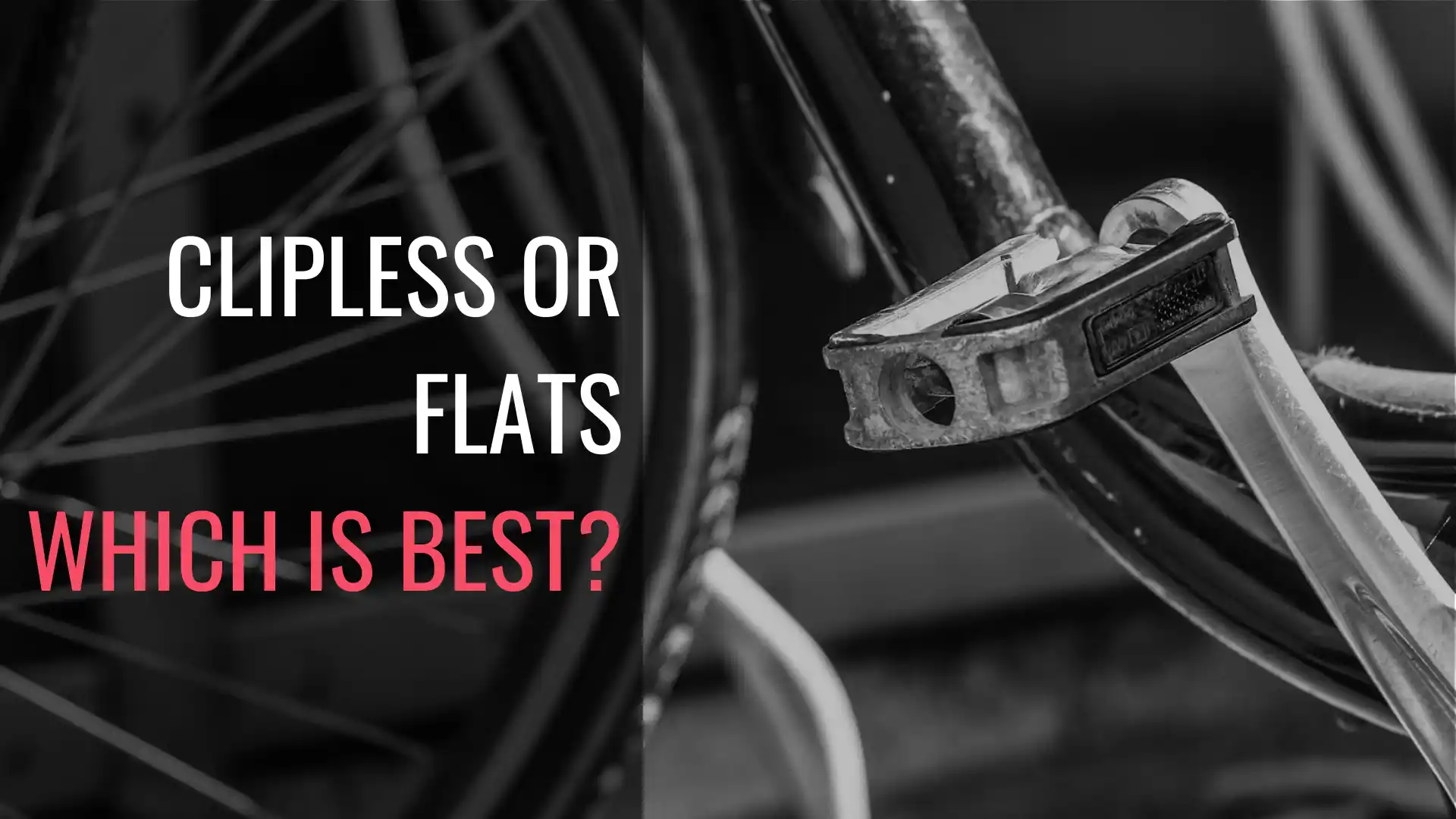
The flat vs. clipless debate has a way of making a pretty simple decision feel like a graduate thesis. Strong opinions everywhere, most of them attached to someone who hasn’t ridden flat pedals since the 90s and genuinely believes clipping in is the only serious option.
I’ve ridden both, switched back and forth, and coached riders through the same question more times than I can count. The honest answer is more nuanced — and more personal — than most pedal evangelists will admit. In this post, we will break down the real differences in pedal stroke mechanics, terrain confidence, power transfer, and how to actually make the switch without overthinking it.
Table of Contents
The Myth of the "Pulling Up" Pedal Stroke
Someone at a group ride probably told you this with complete confidence: “Once you go clipless, you’ll unlock the pull-up stroke and your power will explode.” I spent years trying to perfect this mythical upward pull, convinced I was leaving watts on the table. It felt awkward, forced, and didn’t make me any faster. Turns out, the science agrees.
Research has largely debunked the idea that actively pulling up adds meaningful power. In fact, trying too hard can create unnecessary muscle tension and waste energy. The push stroke is where your watts live.
Gravity does the lifting: When your foot reaches the bottom of the stroke, gravity naturally brings your leg back up. Actively fighting that natural momentum wastes energy rather than adding it.
- Your strongest muscles push: Quads, glutes, and calves are built for pushing. Focusing on these during the power phase is where real gains come from.
- The numbers don’t lie: Pedal force studies show the upstroke contributes less than 1–2% of total power output — not worth the mental or physical effort.
- Clipless efficiency is real, but misunderstood: The genuine benefits come from consistent foot position and retention, not any magical pulling motion.
- Flat pedals reveal the truth: Riders on flat pedals naturally develop smoother strokes because sloppy technique gets punished immediately.
This week, ride one familiar route and focus exclusively on a strong, smooth push through the power phase — you might be surprised how much was already there.
Confidence on Technical Terrain with Flats
There’s a moment most new clipless riders know well — you’re rolling into a tricky root crossing, something feels off, and your brain screams “foot down” before your hands can even reach the brakes. Half a second later you’re doing that slow-motion sideways fall. Flat pedals remove that moment entirely. Your foot comes off when it needs to, not when you remember to twist.
The common advice is that flats are “just for beginners.” That’s backwards. Many experienced trail riders run flats specifically because technical terrain rewards free foot movement and rapid instinctive corrections — things a fixed connection actively works against.
- Instant bail-outs become genuinely instinctive. When something goes wrong fast, your nervous system doesn’t have to remember a cleat release — it just reacts. The mental security this provides lets you push your limits more freely.
- Natural foot repositioning lets you shift weight mid-obstacle without thinking. On loose gravel or wet roots, that micro-adjustment can be the difference between a clean line and a sketchy save.
- Better body movement follows naturally. Flats encourage you to use your hips, core, and arms to maneuver the bike underneath you — crucial for drops, steps, and tight corners.
- Body positioning feedback sharpens because flats punish lazy stance immediately. If your weight is wrong, you’ll feel the pedal shift under your foot before you actually crash.
- Rider confidence compounds over time when you’re not carrying low-level anxiety about unclipping. Relaxed riders make better decisions on technical sections than tense ones.
On your next ride take one familiar technical segment you usually tense up on and ride it on flats — notice how your feet respond before your brain catches up.

Power Transfer and Efficiency with Clipless Systems
Here’s something worth knowing upfront: decades of biomechanical research have largely debunked the “pulling up” myth. Most of your power comes from the downstroke regardless of pedal system. The real advantage of clipless isn’t adding power — it’s the consistent, optimized application of the power you already have.
When your foot is mechanically secured, less energy is lost to foot movement and micro-slippage, especially during hard efforts and long climbs. The efficiency gains are real, but they’re context-dependent — a properly fitted clipless setup rewards riders doing longer miles, structured training, or event riding far more than casual weekend loops.
- Consistent foot placement ensures your muscles fire from the most efficient angle every pedal stroke, eliminating the tiny adjustments your foot makes on a flat pedal.
- Reduced ankle flex stabilizes your movement, directing energy toward propulsion rather than wasting it on stabilizing muscles.
- Improved cadence control allows a smoother, more fluid stroke at higher cadences — particularly noticeable on long climbs where efficiency compounds over time.
- Cleat positioning determines whether clipless works for you or wrecks you. A few millimeters off-center can cause lateral knee stress that builds slowly and hits hard around week three.
- Float adjustment accommodates your natural pedaling motion. Most riders do better starting with more float, not less.
If you’re already riding clipless, have someone check your cleat alignment — even a small correction can meaningfully change how your knees feel on longer rides.
Transitioning Between Pedal Types
Switching pedal systems feels more dramatic than it actually is. Most riders build it up in their heads — imagining crashes, clipped-in panic moments, or forgetting how to ride entirely. The adjustment period is real, but it’s measured in days, not months, and you’re not married to either system. Swap back when conditions call for it, and let your riding tell you what actually works.
- Start in a parking lot, not on a trail. Before your first real clipless ride, spend 15 minutes practicing clip-in and release on flat ground. Muscle memory for the unclip motion needs to be automatic before elevation, traffic, or technical terrain enters the picture.
- Set tension to its loosest setting. Most clipless pedals have adjustable release tension. Dialing it down reduces the panic factor when you need to dab a foot quickly, and gives you time to find your natural foot angle before locking anything down.
- Anticipate your stops. Unclip one foot a few seconds before you come to a complete stop, then brake. This simple habit prevents those slow-motion tip-overs that every clipless rider has experienced at least once.
- Keep flats accessible for rough-day riding. Wet trails, unfamiliar routes, and heavy commutes are genuinely better handled on flat pedals while you’re still building clipless confidence. Switching isn’t regression — it’s smart context-matching.
Give yourself a two-week window before judging. The first few rides will feel awkward regardless of direction. Reserve your verdict until the mechanics feel invisible and you’re actually riding, not managing your feet.
My Experience with Pedals
I have SPD-SL pedals on my road bike, SPDs on my gravel, and flats on my mountain bike. The reason I went in clipless was to get into the habit of the push-pull pedal strokes. But as my cycling miles increased, the more I realized I never did the pull-up stroke But it kept my legs in-place. I got SPDs to try on mountain bikes, but I was not fast enough to bail on the trails and had a few bad falls, so I switched them out with flats. I put the SPDs on my gravel bike to test it out. I have have gotten comfortable with it now, and have not gotten a reason yet to change.
Now, getting used to clipless was a learning curve – I have fallen quite a few times trying to clip-out, a few tumbles on the mtb trails. I’ve had serious sprain as well. It took some time, but have gotten used to it now.
Pick the Pedal That Makes You Want to Ride More
Neither flat pedals nor clipless systems will make or break your riding. What matters is how confident and connected you feel on the bike. I have ridden with both, switched back and forth, and learned that the “right” choice is almost always the one that removes hesitation rather than adds it. Stop chasing what the fast guys use and start paying attention to what actually makes your rides better. And be safe with whatever you choose.
If you are still genuinely unsure, default to flats for a few more rides to test it out. Ride technical stuff, ride long stuff, ride casually. Notice what frustrates you and what feels effortless. That feedback is more valuable than any forum debate.
Take one ride specifically to evaluate your current pedals — not your fitness, not your route. Just notice three moments where your foot position either helped or got in your way. Write them down when you get home. And note situations when you would have bailed.
Related Cycling and Training Content

Mukund Murali is the founder of Pedal My Way (pedalmyway.com), a cycling and fitness media brand reaching 50,000+ monthly visitors. He brings 20+ years of cycling experience spanning road, gravel, and mountain biking, with deep expertise in bike mechanics and repair. A CrossFit L1 and L2 certified trainer (2018–2023), Mukund combines strength training methodology with cycling performance to create evidence-based content for the everyday rider. He is the host of Ask The Pedalist podcast and creator of the PMW Fit workout app on Google Play.