You’re halfway up a rooted climb, hands sweating through your gloves, and somewhere around mile six your palms start to ache in that specific way — not from effort, but from gripping too hard just to feel in control. You ease up, your right hand slips half an inch, and suddenly you’re thinking about your hands instead of the trail ahead.
Most riders never connect that discomfort to their grips. They blame fitness, blame their gloves, blame the trail. I did the same thing for two seasons before I swapped out the stock grips that came on my bike and felt an immediate, almost embarrassing difference.
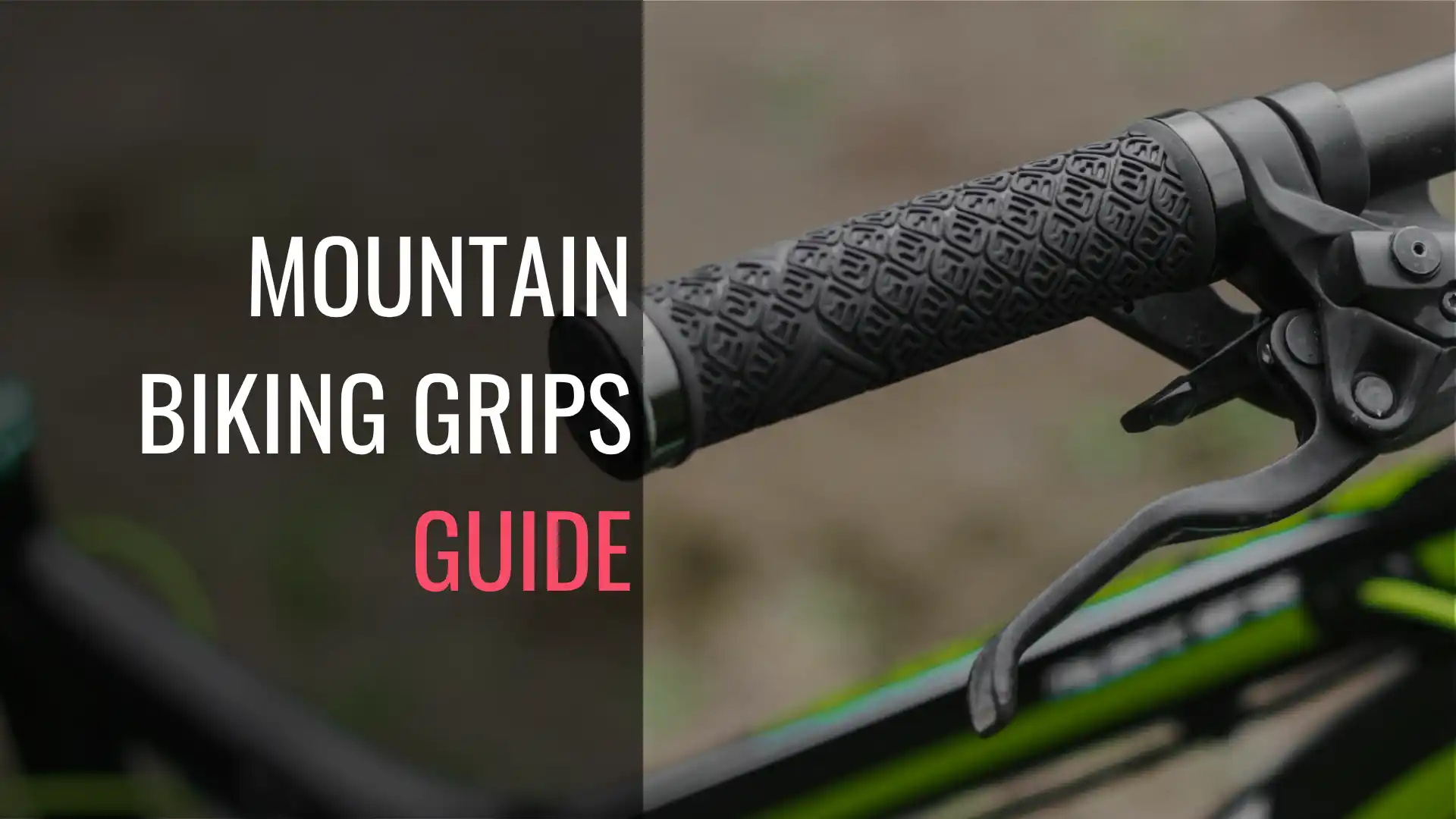
Grips are the one contact point everyone ignores until something goes wrong. They shape how you steer, absorb vibration, and manage fatigue across long rides. In this post, we will walk through grip thickness, materials, lock-on versus slide-on designs, ergonomic options, how riding style should guide your choice, and exactly how to swap them out yourself.
Table of Contents
Why Upgrading Your Mountain Bike Grips Matters
You’re halfway down a rocky descent, hands aching, gripping the bars so hard your forearms are burning before the trail even gets technical. You chalk it up to fitness or nerves. But a lot of the time, it’s the grips. Stock grips are often an afterthought for manufacturers — chosen to hit a price point, not to match your hands, your riding style, or the terrain you actually ride.
Grips are the only contact point between your hands and the bike, making them one of the highest-leverage upgrades you can make — and one of the most overlooked. Most riders chase suspension or tires before ever questioning what’s sitting right in their palms.
- Better control and confidence: When your hands feel locked in, you brake later, corner harder, and trust the bike more — without fighting for purchase on technical sections.
- Reduced fatigue and arm pump: Hard, cheap grips transfer every root and rock straight into your hands and wrists. The right material and ergonomic design delays fatigue significantly, meaning longer and more enjoyable rides.
- Hand numbness relief: Numbness and nerve compression are often grip problems in disguise. Upgrading thickness or material has fixed “mystery numbness” for more riders than any stretching routine ever did.
- Improved vibration damping: Different grip materials absorb trail chatter differently, reducing stress transferred to your hands, wrists, and forearms over time.
Pull your current grips off today and give them a critical look — check for wear, hardness, and whether they were ever really the right fit to begin with.
Lock-On vs. Slide-On Grips: Pros and Cons
This is the first decision you’ll face when shopping for new grips, and most riders just default to whatever looks cool. Let’s break down the real-world differences so you can pick what actually makes sense for how you ride.
Installation, Removal, and Security
- Lock-on grips clamp directly onto your handlebar with a small bolt — slide them on, tighten, done. A basic hex key is all you need to pull them off and reinstall in minutes, which is a huge plus if you like to tinker or swap between setups. Once installed correctly, they won’t rotate or slip, even after hours of riding in wet conditions with sweaty hands.
- Slide-on grips rely on friction or adhesive to stay put. Once properly set, they offer excellent anti-rotation security — but installation requires rubbing alcohol or compressed air, and removal usually means cutting them off. You’re not getting those back on mid-trail without a fresh pair.
Feel and Comfort
Slide-ons put rubber directly against the bar, which can improve vibration damping and feel slightly more cushioned on long, chattery descents. Lock-ons have an inner plastic sleeve that creates a marginally firmer feel — most riders won’t notice, but it’s worth knowing if you have sensitive hands.
Weight and Cost
Lock-ons run roughly 20–30 grams heavier due to the metal clamps and tend to cost slightly more. For most trail and lifestyle riders, that weight gap is meaningless. For XC racers counting every gram, slide-ons have a clear edge here.
For mixed weather and technical terrain, lock-on grips are the more reliable everyday choice. The minor weight penalty is worth never thinking about your grips mid-descent.

How to Choose the Right Grip Thickness (Diameter)
Most riders grab whatever feels okay in the shop or go with what a buddy recommended. But grip diameter is one of the most personal decisions on your bike — get it wrong and you’re dealing with hand fatigue, numbness, or arm pump on trails you normally handle fine.
The old rule of “thicker is comfier” is mostly wrong. The right thickness comes down to your hand size, grip strength, and how long you typically ride.
- Small hands (under 7 inches palm width): Slim or standard diameter grips (29–31mm) work better here. A grip that’s too thick leaves your fingers partially open, which increases fatigue rather than reducing it.
- Large hands or strong grip strength: Mid to large diameter grips (32–34mm) give you more surface contact and better control on technical terrain without demanding extra squeeze effort.
- Riders prone to hand numbness: A slightly thicker grip can help distribute pressure more evenly — but pairing it with a short clamp zone design matters just as much as diameter alone.
- Enduro or long-distance riders: Prioritize a diameter that lets your fingers wrap almost completely around the grip. Full wrap means less death-gripping, which means your hands last longer on punishing descents.
Not sure where you land? Make a loose fist as if holding your bars — your fingertips should nearly touch your palm with a slight gap. Too much gap means too thick; fingers digging in means too thin.
Measure your current grip diameter today, then note how your hands feel after your next ride before buying anything new.
Comparing Grip Materials: Rubber, Silicone, and Foam
Most riders assume “a grip is a grip” — until their hands are soaked in sweat on a long climb or they’re white-knuckling a descent in the rain. Material determines how a grip performs when conditions stop being ideal, which is exactly when it matters most.
It’s tempting to think the softest grip is always best, but too soft and your hands fatigue faster from clenching, and the material degrades quickly. Each option trades something to give you something else:
- Rubber: The most common and versatile material, offering a solid balance of durability, vibration damping, and grip in both wet and dry conditions. Softer compounds absorb more trail chatter but wear down faster under aggressive use.
- Silicone: Exceptionally tacky in wet conditions and gentle on hands over long rides. It doesn’t absorb water, so grip stays consistent, but it tears more easily than rubber and typically costs more.
- Foam: The lightest option, popular with XC racers for its ability to absorb trail vibration. The tradeoff is durability — foam degrades faster and offers almost no wet-weather grip, making it a poor choice for technical terrain.
- Dual-compound rubber: Combines a firmer inner core for structure with a softer outer layer for grip and vibration damping — a versatile starting point for most trail riders.
This week, flip your grips over and inspect the underside for wear — that’s where material breakdown shows up first and tells you exactly what your hands have been dealing with.
Ergonomic Grips vs. Traditional Round Grips
The right answer here depends almost entirely on your hands — not the marketing copy on the packaging. Both grip styles have genuine strengths, but they serve different riders in different situations.
What Ergonomic Grips Actually Do
Ergonomic grips have a wing-shaped or contoured profile that spreads pressure over a larger surface area of the palm, rather than concentrating it on the sensitive nerves running through the center of your hand. For riders dealing with numbness, fatigue, or long days in the saddle, this can genuinely change the experience.
Where Traditional Round Grips Still Win
Round grips give you full rotational freedom, letting you micro-adjust hand position constantly on technical terrain without thinking about it. For aggressive, fast-paced riding where quick direction changes matter, that adaptability often feels more natural under pressure.
The Fit Problem Nobody Warns You About
Ergonomic grips only work if the wing angle matches your natural wrist position. Install them slightly off and you’ll create the exact tension you were trying to eliminate. Lock-on versions help here — dial in the rotation before tightening.
Hand Size Matters More Than You’d Think
Riders with smaller hands often find ergonomic grips awkward because the wing sits in the wrong place relative to the palm. Traditional round grips fit a wider range of hand sizes without any adjustment.
Take a long ride and notice exactly where your hands fatigue first — that single observation will tell you more about which direction to go than any product comparison chart.
How Riding Style (Enduro, XC, Downhill) Influences Grip Choice
Most riders buy grips based on what looks cool or what a sponsored athlete is running — without thinking about how they actually ride. A cross-country rider hammering fast singletrack has almost nothing in common with a downhill rider sending gnarly chunk, and their hands need completely different tools. Your specific needs for control, comfort, and vibration damping change dramatically depending on your discipline.
Think honestly about what your hands do on a typical ride, then use that as your starting filter when shopping:
- Cross-Country (XC): Thinner, firmer grips with minimal texture. You’re grinding long, pedal-heavy efforts, so lightweight construction and enough vibration damping to keep your hands fresh over hours in the saddle matter most.
- Trail/All-Mountain: A medium-thickness grip with moderate texture earns its keep here. You need enough cushion for rough patches without sacrificing feedback on technical moves — a balanced blend of comfort and control.
- Enduro: Softer, tackier compound with aggressive texture and a robust lock-on mechanism. Your hands absorb repeated high-impact hits across prolonged descents, so extra damping and unwavering grip — especially in wet conditions — fight arm pump when it matters most.
- Downhill (DH): The thickest, softest grips available. Speed, vibration, and raw grip force are all extreme, so a dual-compound grip with heavy-duty lock-on clamps keeps fatigue from turning into a sketchy situation at high speed.
Identify which category honestly fits your riding, and let that drive your choice — not brand loyalty or someone else’s race schedule.
Steps for Installing and Removing MTB Grips
Most riders treat grip installation like some mysterious mechanic’s art. It really isn’t. The biggest mistake is forcing things — yanking off old grips dry or muscling new ones on without any lubrication. That’s how you tear rubber and scratch your bars. Use the right trick for each grip type and the whole job takes about ten minutes.
- Remove lock-on grips by loosening the clamp bolt(s) with a 2.5mm–4mm Allen key (depending on your brand), then sliding them straight off. No cutting, no fuss.
- Remove slide-on grips by carefully lifting the edge near the bar end with a flathead screwdriver and squirting a little isopropyl alcohol underneath. Twist and slide them off — the liquid breaks the seal without destroying the grip if you want to reuse it.
- Clean your handlebars thoroughly with a cloth and isopropyl alcohol before installing anything new. Old adhesive residue or dirt prevents a flush fit and causes annoying creaking mid-ride.
- Install slide-on grips by spraying isopropyl alcohol generously inside the grip, then quickly sliding it on with a twisting motion. It lubricates enough to seat the grip easily, then evaporates and creates a secure bond. Leave them for at least an hour before riding.
- Install lock-on grips by positioning them at your preferred rotation angle, then tightening the clamp bolts until snug. Overtightening cracks the collar and strips threads — snug is enough.
Give both grips a firm twist test before your next ride to confirm nothing moves under load.
Get a Grip - For a Better Ride
Grips are one of those upgrades that feel almost too simple to matter — until you swap them and wonder how you ever rode without them. You don’t need to overthink this. Pick the thickness that fits your hands, choose a material that matches your conditions, and decide whether your wrists are asking for something ergonomic. That’s genuinely the whole decision.
Start with one ride on better grips and let your hands tell you the rest. Your trail is waiting — go grab it.
Related Cycling and Training Content

Mukund Murali is the founder of Pedal My Way (pedalmyway.com), a cycling and fitness media brand reaching 50,000+ monthly visitors. He brings 20+ years of cycling experience spanning road, gravel, and mountain biking, with deep expertise in bike mechanics and repair. A CrossFit L1 and L2 certified trainer (2018–2023), Mukund combines strength training methodology with cycling performance to create evidence-based content for the everyday rider. He is the host of Ask The Pedalist podcast and creator of the PMW Fit workout app on Google Play.