You clip in, push off, and tell yourself this is the ride that changes things. Maybe you’ve been at it for a few weeks — legs burning, sweat soaking through your jersey — and you step on the scale expecting some kind of reward. Nothing. Or worse, the number went up.
That moment is demoralizing, and it makes a lot of riders either quit or go looking for some extreme protocol that promises faster results. I’ve been there. Most of us have.
Here’s the thing: cycling absolutely works for weight loss, but not the way most fitness content describes it. The missing piece is usually not effort — it’s understanding how your body actually responds to riding, eating, and recovering together.
In this post, we will cover the science, a realistic four-week plan, how to fuel your rides, and how to finally track progress in a way that keeps you moving forward.
Table of Contents
The Science Behind Cycling and Weight Loss
You finish a two-hour ride, legs tired, jersey soaked, feeling like you earned a massive meal. So you eat one. Then you step on the scale a week later and nothing has moved. That gap between effort and result is where most cyclists get frustrated and start blaming their metabolism. The real answer is usually simpler and a little more annoying to hear.
The body undergoes these changes –
- Cycling creates a caloric deficit by burning energy, but your body is remarkably good at compensating — through hunger signals, reduced daily movement, and even slowing your basal metabolic rate under chronic fatigue. Weight loss happens when the deficit is real and consistent, not just felt.
- Aerobic fat oxidation kicks in primarily during low-to-moderate intensity riding, roughly 60–75% of max heart rate. Long, steady rides are genuinely useful — not just easy.
- Muscle preservation matters more than most cyclists realize. Cycling builds enough lower-body lean muscle to keep your resting metabolism from tanking during a cut — muscle burns more calories at rest than fat does.
- Improved insulin sensitivity from consistent riding helps your cells take up glucose more efficiently, leading to more stable blood sugar and less fat storage over time.
- Hormonal response to long rides can spike ghrelin, your hunger hormone, significantly. This is why ride nutrition strategy matters as much as the ride itself.
Consistency over intensity is what the research actually supports. Three moderate rides per week outperform one brutal session followed by three days of recovery.
Setting Realistic Goals and Caloric Expectations
You finish a 45-minute ride, feel amazing, and reward yourself with a recovery smoothie that clocks in at 480 calories — because your app said you burned 600. Three weeks later, the scale hasn’t moved and you’re convinced cycling doesn’t work. It does. You just got handed some bad math.
A revisit of the original thinking behind calorie counting –
- Most calorie-burn estimates run 20–30% too high, and we typically underestimate what we eat afterward. A sustainable target is 0.5 to 1 pound of fat loss per week — a modest daily deficit, not a punishment plan.
- Caloric deficit sweet spot: Aim for 300–500 calories per day, primarily through smart food choices, with cycling as your powerful assist. Bigger cuts tank your energy and make every ride a suffer-fest.
- Set process goals, not just outcome goals: Instead of “lose 10 pounds,” try “ride three times a week for 45 minutes.” These are actions you control, and they build real momentum.
- Consistency over intensity: Build total riding volume first, then layer in harder efforts. Jumping straight to punishing workouts on a thin base is how you end up injured and off the bike.
- Non-scale victories matter: Better climbing, improved sleep, and a clearer head on your morning ride are real progress — often visible long before the scale moves.
- Weight fluctuation is normal: Water retention, sodium, and stress can swing your weight 2–4 pounds daily. Weigh weekly, same conditions, or stop using the scale as your only measuring stick.
Your action today: calculate your estimated daily caloric needs, subtract 300–500 calories, and write down one non-scale goal to hit in the next 30 days.

Fasted Rides vs. Fueled Rides: What Works Best?
The internet is full of conflicting takes on this one. Here is what actually matters for your long-term progress, stripped of the hype on both sides.
What Fasted Riding Actually Does
Riding before breakfast does increase your body’s reliance on fat oxidation, since muscle glycogen is lower after an overnight fast. The catch is that burning a higher percentage of fat does not automatically mean more fat lost over a week — your body is remarkably good at adjusting fuel use across the full day.
Where Fasted Rides Go Wrong
Most people underestimate how hard low-glycogen riding feels beyond 45 minutes. You slow down, cut the ride short, and often overeat afterward — quietly erasing whatever fat-burning edge you thought you were getting.
The Case for Riding Fueled
Even a small snack before your ride lets you perform better and longer. Total caloric burn across a quality 75-minute fueled ride will almost always beat a sluggish 40-minute fasted one. Good fuel also helps preserve muscle mass, which keeps your metabolism working in your favor.
When Fasted Riding Is Worth Trying
Short, easy Zone 2 rides under 45 minutes are the reasonable exception. If you are heading out at a conversational pace and genuinely are not hungry, skipping the snack is fine — just do not make it a rigid rule you suffer through.
The Real Answer
The best approach is whichever one helps you show up consistently and ride with energy. Consistency beats optimization every time. If you want a simple starting point, try half a banana 30 minutes before your next ride and notice the difference.
A 4-Week Beginner Cycling Training Schedule
Most beginner plans do too little or too much — both set you up to quit. Smart is better than more, especially early on. These first four weeks aren’t about destroying yourself; they’re about building a consistent aerobic base your body can actually adapt to. Ride at a conversational pace throughout — if you can’t hold a full sentence, you’re going too hard.
Week 1 — Build the Habit (3 rides, 30–45 min each): Keep every ride easy and flat. You’re teaching your body to recover from riding, not testing its limits. Focus on enjoying the movement and establishing the routine.
Week 2 — Add a Little Time (3–4 rides, 45–60 min each): Same easy pace, slightly longer. One ride this week should be your longest yet — this long easy ride becomes the backbone of your training going forward.
Week 3 — Introduce Variety (3–4 rides, one reaching 60–75 min): Keep most rides easy, but make one slightly longer effort. You can also explore a few gentle hills — nothing structured yet, just exploratory.
Week 4 — Consolidate and Recover (3 rides, back to 45–60 min): Drop the volume intentionally. This is your recovery week — skipping it is exactly how people plateau or get hurt. Let your body absorb the work you’ve done.
Schedule your Week 1 rides on your calendar right now — same days, same approximate time — and treat them like appointments you can’t cancel.
Incorporating High-Intensity Interval Training (HIIT)
I used to think more miles always meant more results. Then I did my first proper interval session — twenty minutes total, completely wrecked, and burning more calories for the next two days than any long slow ride had ever produced. HIIT isn’t about suffering for suffering’s sake. It’s about working smarter on days when you have forty minutes, not four hours — and it’s less intimidating than it sounds, because intensity is relative to you.
The key is structure. A real interval protocol alternates between hard work periods and deliberate recovery, forcing your body to adapt in ways steady riding simply cannot replicate. Start twice a week, never on back-to-back days, and focus on perceived effort — your hard intervals should feel like an 8 or 9 out of 10.
20/10 Tabata Intervals: Twenty seconds all-out, ten seconds rest, repeated eight times. The whole block takes four minutes and delivers a serious metabolic hit that lingers for hours after you stop pedaling.
30/90 Work-Rest Intervals: Thirty seconds at maximum effort, ninety seconds easy spinning. Enough recovery to maintain quality across six to eight rounds without falling apart.
Hill Repeats: Attack any short climb at full effort, then soft-pedal back down. The added resistance naturally spikes your power output without counting seconds obsessively.
Pyramid Intervals: One minute hard, one easy — then two on, one off, three on, one off — then reverse back down. The changing duration keeps you mentally engaged throughout.
Start small: add just two or three hard efforts into a ride you already have planned this week, and keep everything else easy.
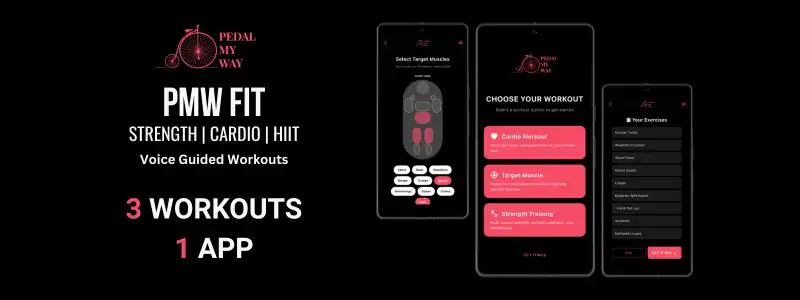
At Pedal My Way we built an app for such occasions – check out PMW FIT to help you with your cycling and fitness goals.
Off-the-Bike Nutrition and Recovery Strategies
Here’s what most cycling advice skips: you don’t actually lose weight on the bike. You lose it in the hours after, when your body decides what to do with the effort you just put in. We often overemphasize calories burned during a ride and underappreciate the other 23 hours of the day.
The common mistake is treating food as a reward after a ride — leading to either guilt-eating or under-fueling, both of which stall progress. Think of post-ride nutrition as maintenance, not a transaction. This isn’t about restrictive diets or counting every macro; it’s about fueling intelligently so your body can adapt and repair.
- Protein within 60 minutes of riding: Aim for 20–30g from whole sources like eggs, Greek yogurt, or a chicken breast. This is when muscles are most receptive to repair, and skipping it slows recovery significantly.
- Don’t fear carbs — time them: Eat most of your carbohydrates around your rides, not at 9pm on the couch. Focus on complex options like oats or sweet potatoes rather than sugary snacks.
- Hydrate beyond the ride: Most riders stop drinking water the moment they dismount. Aim for at least 16oz within an hour of finishing, and sip consistently throughout the day.
- Sleep is a training variable: Poor sleep spikes cortisol, actively working against fat loss. Seven to nine hours isn’t soft advice — it’s literally part of the plan.
- Eat mindfully on rest days: Pay attention to hunger cues. Are you truly hungry, or bored and tired? Slow down, and stop when comfortably full.
Tonight, prep a simple post-ride snack in advance — protein plus a few carbs — so it’s ready before your next ride instead of making hungry decisions after.
How to Track Your Progress and Stay Motivated
Here’s where most people go wrong: they weigh themselves every morning and feel defeated by Wednesday. The scale captures water retention, digestion, and stress — not fat loss. Real progress tracking means gathering a fuller picture, looking for trends rather than obsessing over a single number that shifts daily for reasons unrelated to your effort.
Check these metrics weekly, not daily, and progress stops feeling invisible.
- Weekly average weight: Weigh yourself on the same day each week, same time, same conditions. One weekly snapshot beats seven daily emotional rollercoasters every time.
- Benchmark rides: Every few weeks, repeat a specific route or segment. Notice if your average speed improves, your heart rate drops for the same effort, or that climb leaves you less winded. That’s measurable, objective progress.
- Body measurements: Waist and hip circumference often shift before the scale budges. Measure every two weeks and you’ll catch changes the scale misses entirely.
- Monthly progress photos: Same clothes, same lighting, once a month. Our brains are terrible at registering subtle change — photos reveal body recomposition that numbers never capture.
- Non-scale victories: The hill you used to walk up but now ride. Clothes fitting differently. Sleeping better. These are the real indicators of progress and what genuinely keeps you showing up.
Action: Pick two metrics from this list and commit to logging them for 30 days. That’s the only tracking system you need to start — and to keep going.
Real Plans for Real Loss
Weight loss through cycling isn’t about punishing yourself into results. It’s about building something consistent, something you actually look forward to. You’ve got the framework now — the science, the schedule, the nutrition basics. The only thing left is to clip in and start.
Progress will feel slow some weeks and surprising in others. That’s completely normal. Trust the process, ride for how it makes you feel, and the results will follow. Your best ride is always the next one.
Related Cycling and Training Content

Mukund Murali is the founder of Pedal My Way (pedalmyway.com), a cycling and fitness media brand reaching 50,000+ monthly visitors. He brings 20+ years of cycling experience spanning road, gravel, and mountain biking, with deep expertise in bike mechanics and repair. A CrossFit L1 and L2 certified trainer (2018–2023), Mukund combines strength training methodology with cycling performance to create evidence-based content for the everyday rider. He is the host of Ask The Pedalist podcast and creator of the PMW Fit workout app on Google Play.